Innovative Architecture in Outsourced Assembly and Fabrication

The Evolution of Outsourced Assembly Services
Historical Overview of Outsourced Assembly
Outsourced assembly services began as simple contract work in the early twentieth century when manufacturers sought external partners for basic component fitting. Companies handed off repetitive tasks such as welding and fastening to specialized workshops that operated near raw material sources. This shift allowed original equipment makers to focus internal resources on design and final testing rather than every production step. Over decades the model matured into structured partnerships that included entire fabrication sequences. Early adopters in consumer goods learned that reliable external teams could match in-house output when clear specifications governed the work. The practice expanded as firms realized consistent quality control depended on shared standards instead of ownership alone. Today the same principle drives decisions across multiple industries that require scalable capacity without permanent facility expansion.
Impact of Globalization on Assembly Services
Globalization opened borders for outsourced assembly services and created supply networks that span continents. Manufacturers now compare costs and capabilities across regions before selecting partners for fabrication runs. Assembly lines in one country receive parts fabricated in another, then ship finished modules onward for integration. This geographic spread demands precise coordination of schedules and documentation. Firms that once managed single plants now oversee distributed operations where each site contributes specialized skills. Automotive producers rely on these links to balance labor rates with technical expertise. The result appears in faster response to demand spikes and reduced capital tied up in idle equipment. Globalization also introduced new reliability benchmarks because any weak link affects the entire chain reaching end customers.
Architectural Innovations in Assembly Line Design
Optimizing Space for Efficiency
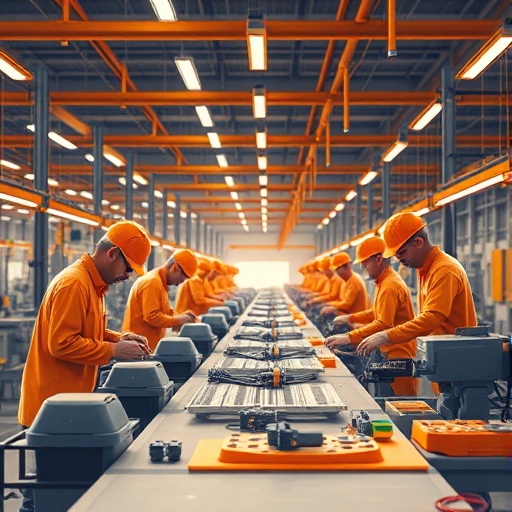
Modern plants redesign floor plans to shorten material travel distances within outsourced assembly services. Architects position receiving docks directly adjacent to initial fabrication stations so raw stock moves straight to welding cells without extra handling. Wide central aisles accommodate automated guided vehicles that deliver components to multiple assembly line stations in sequence. Vertical storage racks rise above work areas to free floor space while keeping parts accessible. These layouts cut cycle times and lower the risk of damage during transport. Planners also reserve flexible zones that can reconfigure quickly when product variants change. The approach treats every square meter as an active contributor to throughput rather than passive storage. Companies that adopt such architecture report measurable gains in daily output without adding square footage.
Integrating Advanced Technologies in Architecture
Assembly service facilities now embed smart infrastructure that supports real-time monitoring and adaptive control. Structural columns house power and data conduits that feed robotic arms stationed along the assembly line. Overhead grids deliver compressed air and coolant exactly where fabrication cells need them. Sensors embedded in floors track equipment vibration and alert maintenance teams before failures interrupt production. These elements combine architectural form with operational intelligence so the building itself aids quality control. Automotive partners expect such integration because it enables rapid model changeovers. The same networks support traceability systems that record every weld and torque value for later audits. Architecture therefore becomes an active participant in manufacturing performance rather than a neutral container.
Sustainable Practices in Assembly Plant Design
Forward-thinking designs incorporate daylighting, rainwater collection, and energy-recovery systems that lower operating costs for outsourced assembly services. Roof structures support solar arrays sized to offset a significant portion of plant demand. Exterior walls use insulated panels that maintain stable internal temperatures for precision fabrication work. Inside, segregated waste streams route metal scrap and packaging materials directly to recycling stations. Architects also specify low-VOC coatings and flooring that improve air quality for workers on long shifts. These choices align environmental goals with financial returns because reduced utility bills improve margins on fabrication contracts. Plants built with such principles attract clients who require documented sustainability metrics alongside delivery performance.
Quality Control Strategies in Outsourced Fabrication
Importance of Inspections in Manufacturing
Regular inspections form the backbone of reliable outsourced assembly services because defects discovered late create expensive rework. Teams perform incoming checks on every lot of supplied components before they reach the assembly line. Dimensional verification and surface examinations catch material issues before welding begins. Mid-process audits review critical joints and fastener torques at set intervals. Final inspections compare finished modules against customer drawings and functional test protocols. Documented results feed continuous improvement loops that refine both internal procedures and supplier requirements. Automotive customers often mandate these layered checks because safety components leave no room for variance. Thorough inspection routines therefore protect brand reputation while keeping fabrication costs predictable.
Reliability Standards in Assembly Services
Partners in outsourced assembly services adopt recognized reliability standards that define acceptable failure rates and test methods. These standards translate into daily routines such as statistical process control charts posted at each station. Operators record measurements and flag any drift before it produces nonconforming parts. Calibration schedules ensure gauges and welding equipment remain within tolerance. When deviations appear, root-cause analysis leads to targeted corrections rather than broad process halts. Reliability metrics also guide equipment selection so that new fabrication cells meet existing performance baselines from day one. Customers gain confidence when suppliers demonstrate consistent adherence to these benchmarks across multiple production runs.
Best Practices for Quality Assurance
Effective quality assurance in outsourced assembly services combines training, documentation, and corrective action systems. Operators receive ongoing instruction on updated drawings and measurement techniques. Standardized work instructions posted at stations eliminate interpretation differences between shifts. Nonconformance reports trigger immediate containment followed by permanent fixes tracked to closure. Cross-functional teams review data monthly to identify trends that affect multiple product families. Suppliers of assembly services that follow these best practices earn preferred status and larger contract volumes. The discipline extends to packaging operations because damaged goods during shipment negate upstream quality efforts. Consistent application builds long-term trust between manufacturers and their fabrication partners.
Reducing Waste in Outsourced Manufacturing
Innovative Waste Management Techniques
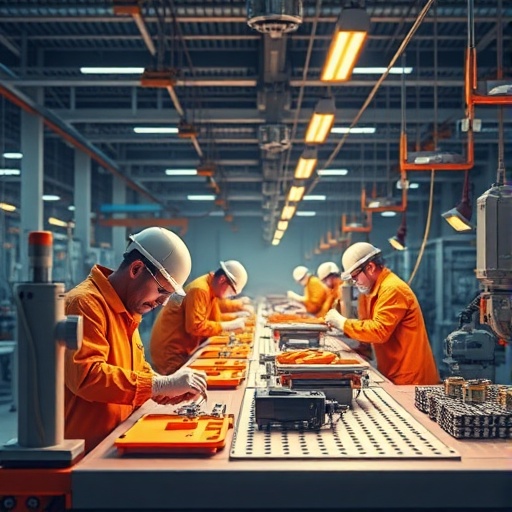
Plants handling outsourced assembly services implement closed-loop material flows that capture scrap before it leaves the building. Welding cells route fume extraction through filtration units that recover metal particles for reuse. Cut-off remnants from fabrication feed smaller component production instead of entering general waste streams. Digital nesting software optimizes sheet layouts to minimize off-fall during stamping and laser cutting. These techniques lower raw material purchases while meeting environmental reporting requirements. Some facilities convert packaging waste into internal dunnage for outgoing shipments, closing another loop. The cumulative effect appears in lower disposal fees and improved margins on fixed-price contracts.
Case Studies: Successful Waste Reduction in Plants
One automotive supplier reduced metal scrap by thirty percent after redesigning its outsourced assembly services layout around shared cutting resources. Another fabrication partner introduced returnable containers that eliminated single-use packaging across three assembly lines. Both examples demonstrate that targeted changes in material handling produce measurable results without sacrificing output. Management tracked every initiative against baseline waste volumes and shared progress with customers. The documented savings strengthened contract renewals and opened doors to additional programs. These cases illustrate how waste reduction integrates directly with architectural and process decisions rather than remaining a separate compliance exercise.
Enhancing Time-to-Market through Outsourcing
Streamlining Processes with Assembly Services
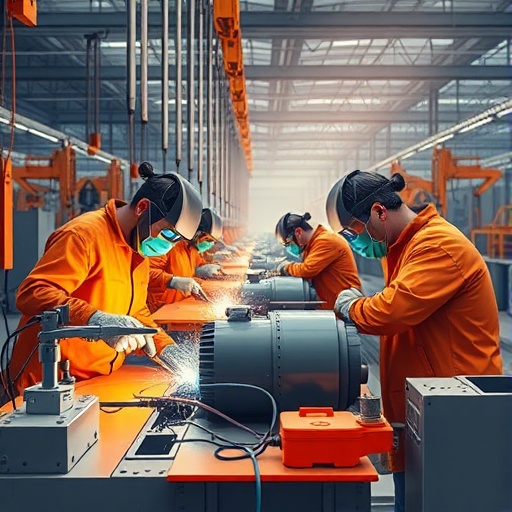
Outsourced assembly services accelerate product launches by absorbing ramp-up activities that would otherwise delay internal lines. External teams prepare fixtures, train operators, and validate processes while design teams finalize details. Parallel execution shortens the interval between engineering release and first customer shipments. Clear handoff protocols ensure that quality control checkpoints transfer smoothly between organizations. Automotive programs benefit especially because seasonal model changes leave little margin for internal bottlenecks. The speed advantage compounds when assembly service providers already operate compatible equipment and certified processes.
The Role of Packaging in Accelerating Delivery
Thoughtful packaging design protects modules during transit and speeds unloading at the next assembly point. Custom dunnage nests parts securely so they arrive ready for immediate integration rather than requiring extra sorting. Reusable containers reduce both waste and the time spent managing returns. When packaging engineers collaborate early with fabrication teams, they align container sizes with standard pallet footprints and truck dimensions. This coordination trims days from the overall logistics chain and lowers damage claims that could otherwise stall time-to-market goals. Reliable packaging therefore functions as an extension of the assembly line itself.
Collaboration Between Automotive and Assembly Firms
Close partnerships between automotive manufacturers and outsourced assembly services providers create shared visibility into schedules and capacity. Joint planning sessions align fabrication milestones with vehicle build dates. Real-time data exchanges let both sides adjust for material delays before they cascade downstream. These relationships often include resident engineers who resolve issues on-site rather than through lengthy correspondence. The resulting trust enables faster decision cycles and reduces the risk of late launches. Automotive firms gain scalable production without owning every facility, while assembly partners secure predictable volumes that support their own capital investments.